September 29, 2026
Cute Font: The Typographic Magic That Makes Words Smile
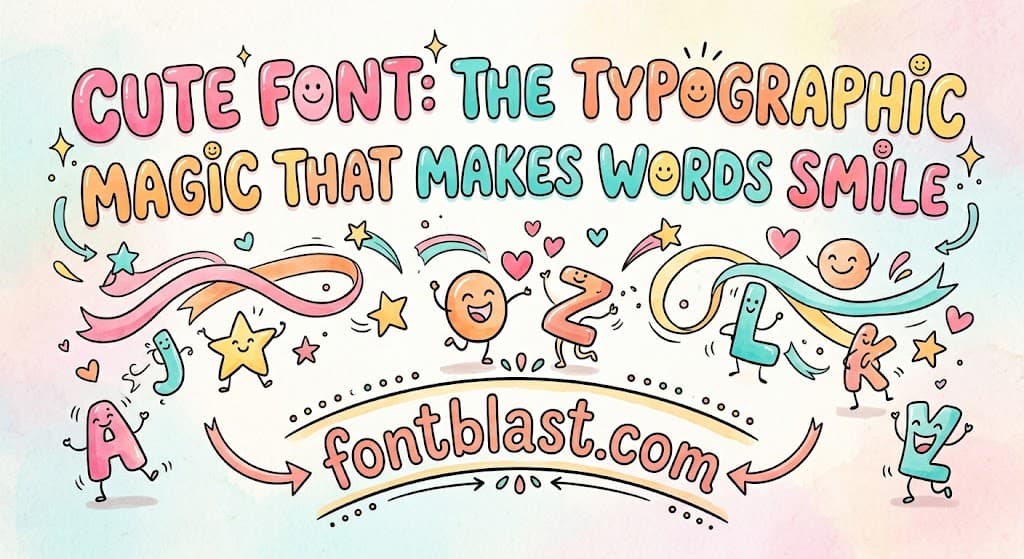
If you've ever picked out a typeface for a children's book or designed a label for a handmade shop, you've likely already encountered the "cute font" category. It isn't a single typeface but an entire class of typography that carries warmth, friendliness, and playfulness. In 2026's design landscape, the influence of cute fonts is spreading far beyond children's brands into food packaging, beauty labels, social media visuals, and even corporate branding.
What Makes a Font "Cute"?
Cuteness doesn't come from pink color palettes alone. What truly makes a font feel cute is the shape language of its letters. A widely accepted observation in the design community is that cute fonts typically feature rounded terminals — every stroke ends in a curve rather than a sharp cut; thick, soft strokes with minimal contrast that avoid tension; and wide, open letterforms that sit short and broad rather than tall and narrow.
On a deeper level, the perception of cuteness is tied to humans' natural response to babies. Big round eyes, chubby cheeks, short limbs — when these "neotenic" traits are transplanted onto typography, they become large x-heights, circular counters, and single-story "a" and "g" shapes. In other words, cute fonts trigger an instinctive sense of protectiveness and closeness.
In terms of style families, cute fonts fall into several directions: bubble fonts and rounded sans-serifs, clean and bouncy; handwritten styles that mimic marker or crayon strokes; soft serifs that keep formal structure but soften the edges; and retro display fonts that pull sweetness from 1950s–1980s nostalgia.
Why "Cute" Is Leaving the Kids' Aisle
For a long time, cute fonts were assumed to belong to children's products. But the 2026 design landscape shows those boundaries dissolving. Food and beverage brands are swapping minimalist packaging for quirky sans-serifs to create stronger shelf presence. Beauty and lifestyle brands have discovered that soft typographic language makes them feel more human.
There's a practical logic behind this shift. As AI-generated design floods the market, fonts that look visibly "made by a human hand" gain new value. Slightly irregular, handcrafted cute fonts stand out as more authentic and trustworthy in a sea of AI sameness.
For small businesses and creators, cute fonts offer a low-barrier way to differentiate a brand. A handmade soap brand doesn't need to imitate big-corporate cold modernism — a bubble font or handwritten style can signal "this was made with care."
How to Use Cute Fonts Effectively
The power of cute fonts lies in their warmth, but that's exactly why they need careful pairing. The first principle is balance: when a font is expressive and decorative enough on its own, it should be used for headlines, logos, packaging focal points, or short phrases — while body copy needs a clearer neutral font to carry information. Using a bubble font for long paragraphs quickly drains its charm.
In pairing strategy, cute fonts often work best with minimalist layouts. Let the font be the star of the composition rather than layering visual noise on a busy background.
Color can amplify or break the effect. Soft pastels magnify cuteness, but an unexpectedly vivid neon — electric green or bright orange — can give a cute font contemporary edge and keep it from sliding into saccharine territory.
Context matters just as much. Bubble and chunky round fonts work well for Cricut cutting projects because their outlines are clean and easy to trace. Handwritten styles shine in social media quotes and story covers but may sacrifice legibility at small UI sizes. And if a project needs romance rather than childlike charm, a flowing script with heart-shaped flourishes beats a bubble font every time.
Practical Picks: Cute Fonts Worth Watching
If you're looking for cute fonts you can use right away, here are several that launched in 2025–2026 and have gained traction.
Doodle Sprinkle is a chunky rounded display font with a casual handwritten feel, ideal for classroom materials, birthday invitations, and YouTube thumbnails. It supports OTF and TTF formats and is compatible with Cricut and Silhouette.
Fox Genius offers four styles — regular, italic, thin, and thin italic — a clean and cheerful handwritten typeface suited to school projects, flashcards, and sticker design, also cutting-machine friendly.
Fox Dimsum is a bold bubble display font optimized for cutting projects and T-shirt design. Its rounded cartoon shapes make it a natural fit for stickers, party decor, and dessert branding.
For projects needing a softer, more feminine tone, Glowie is a cute handwritten font with playful curves and a subtle aesthetic, great for brand identities and invitations. Wonderla Garniss is a relaxed handwritten script, effortless and flowing, well suited to social media quotes and lifestyle branding.
On the free side, Cute Font on Google Fonts is a Korean and Latin character set designed by TypoDesign Lab, offering an open-source option for bilingual projects.
Cuteness as a Design Strategy
Ultimately, cute fonts keep growing in 2026 because they answer a universal design need: creating emotional connection in digital spaces. A rounded letter contour, a hand-drawn imperfection, a soft terminal curve — these details communicate "a real person cares about what you're looking at."
The next time you choose a font for a project, ask yourself: what do I want my audience to feel before they even read the words? If the answer is warmth, ease, or a smile, a cute font may be the most direct language you can speak.