October 17, 2026
Bold Text Generator: Create Heavy, Standout Text for Social Media & Web
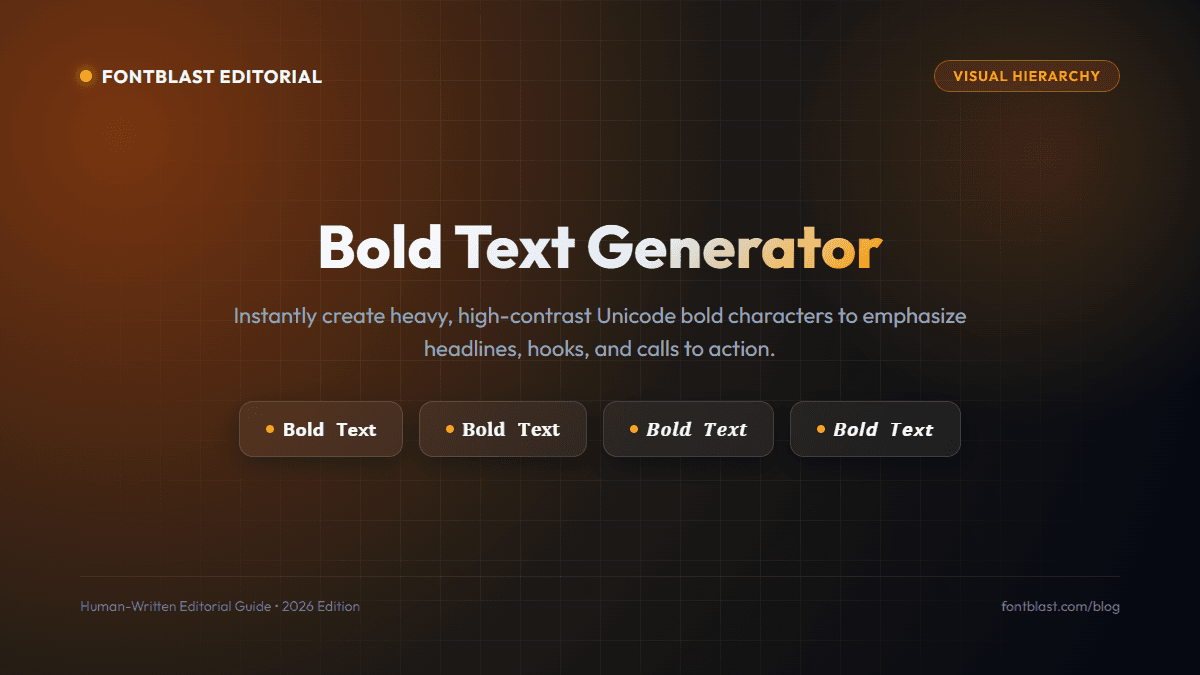
In graphic design and typography, visual weight is the single most effective tool for directing human attention. When a reader glances at a page or scrolls through a rapid social media feed, their eyes naturally gravitate toward elements with the highest contrast. Utilizing an online bold text generator allows you to engineer that visual hierarchy instantly, even on platforms that lack traditional rich-text formatting tools.
From LinkedIn thought-leadership posts to Twitter/X threads and product launch announcements, bold lettering turns skimmed content into consumed content. In this guide, we break down why bold typography works psychologically, explore the anatomy of bold Unicode characters, and reveal how to craft high-converting hooks.
The Psychology of Bold Typography in Scrolling Feeds
Human reading behavior online has evolved from linear reading to erratic scanning. According to eye-tracking research pioneered by the Nielsen Norman Group, web users read in an F-shaped pattern, scanning the first two lines of text before skimming down the left margin in search of visual anchors.
When you employ a bold text generator to highlight the first 4-7 words of a post, you create an unmissable anchor point. This initial contrast spike stops the user’s thumb from scrolling, giving your opening hook the fraction of a second it needs to trigger genuine curiosity.
Why Standard Markdown Doesn't Work Everywhere
On technical platforms like GitHub, Reddit, or Slack, typing asterisks (such as **bold text**) activates markdown parsers to render native bold text. However, major social networks—notably LinkedIn, Twitter/X, Instagram, and TikTok—deliberately strip markdown formatting or treat asterisks as plain punctuation.
A dedicated bold text generator circumvents this issue by translating standard characters into characters from the Mathematical Alphanumeric Unicode block. Because the boldness is inherent in the glyph itself rather than an external CSS rule (like font-weight: bold;), the text remains boldly rendered across desktop and mobile devices alike.
Different Flavors of Bold Unicode
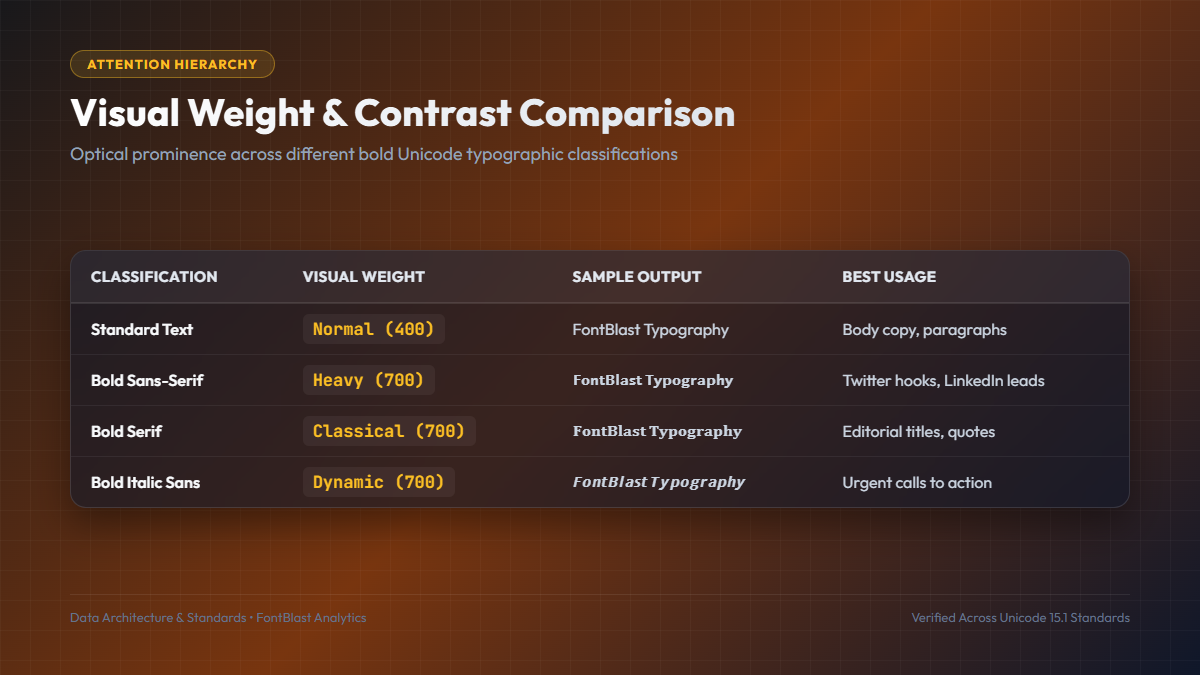
Not all bold text looks identical. Modern generators provide multiple distinct variations to suit your specific context:
- Bold Sans-Serif (𝗕𝗼𝗹𝗱 𝗦𝗮𝗻𝘀): Clean, modern, and punchy. Excellent for tech startups, marketing headlines, and LinkedIn bullet point headers.
- Bold Serif (𝐁𝐨𝐥𝐝 𝐒𝐞𝐫𝐢𝐟): Traditional and authoritative. Features pronounced bracketed serifs that convey prestige, journalistic credibility, and academic weight.
- Bold Italic (𝑩𝒐𝒍𝒅 𝑰𝒕𝒂𝒍𝒊𝒄): Slanted and kinetic. Great for emphasizing quotes, book titles, or creating urgent call-to-action buttons.
- Fraktur Bold (𝕭𝖔𝖑𝖉 𝕲𝖔𝖙𝖍𝖎𝖈): Ultra-heavy blackletter styling tailored for gaming handles, heavy metal branding, and edgy streetwear aesthetic captions.
Best Practices for Crafting High-Impact Posts
"When everything is bold, nothing is bold. True emphasis requires contrast against simple, clean standard text."
To maximize engagement without overwhelming your audience, follow these strategic rules:
- Bold the Lead Hook: Make the first sentence or heading bold to capture scrollers. Once you have their attention, let standard readable body text deliver the detail.
- Highlight Key Data Points: Bold significant numbers, percentages, or milestones (e.g., +340% Growth) to make skimming effortless.
- Separate Bullet Points: Use bold labels at the start of bullet lists to create organized, scannable hierarchies.
- Avoid Whole-Paragraph Bolding: Making entire paragraphs bold makes text difficult to read on mobile screens and dilutes your core takeaway.
Frequently Asked Questions About Bold Text Generators
Will bold Unicode text affect my post's reach?
Social media algorithms do not penalize Unicode text when used thoughtfully in moderation. In fact, posts that feature distinct visual hooks typically enjoy higher click-through rates and longer dwell times, which positively reinforces algorithmic visibility.
Can screen readers parse bold Unicode words?
Screen readers can parse mathematical bold characters, but they announce the specific mathematical variant. For optimal accessibility, keep your core call-to-action and primary body copy in standard text, using bold glyphs strictly for headline accents.
Discover more creative ways to style and emphasize your copy by exploring our Text Decorator and Social Fonts Generator. You can also browse downloadable web fonts in our Free Fonts Directory.